

At a glance
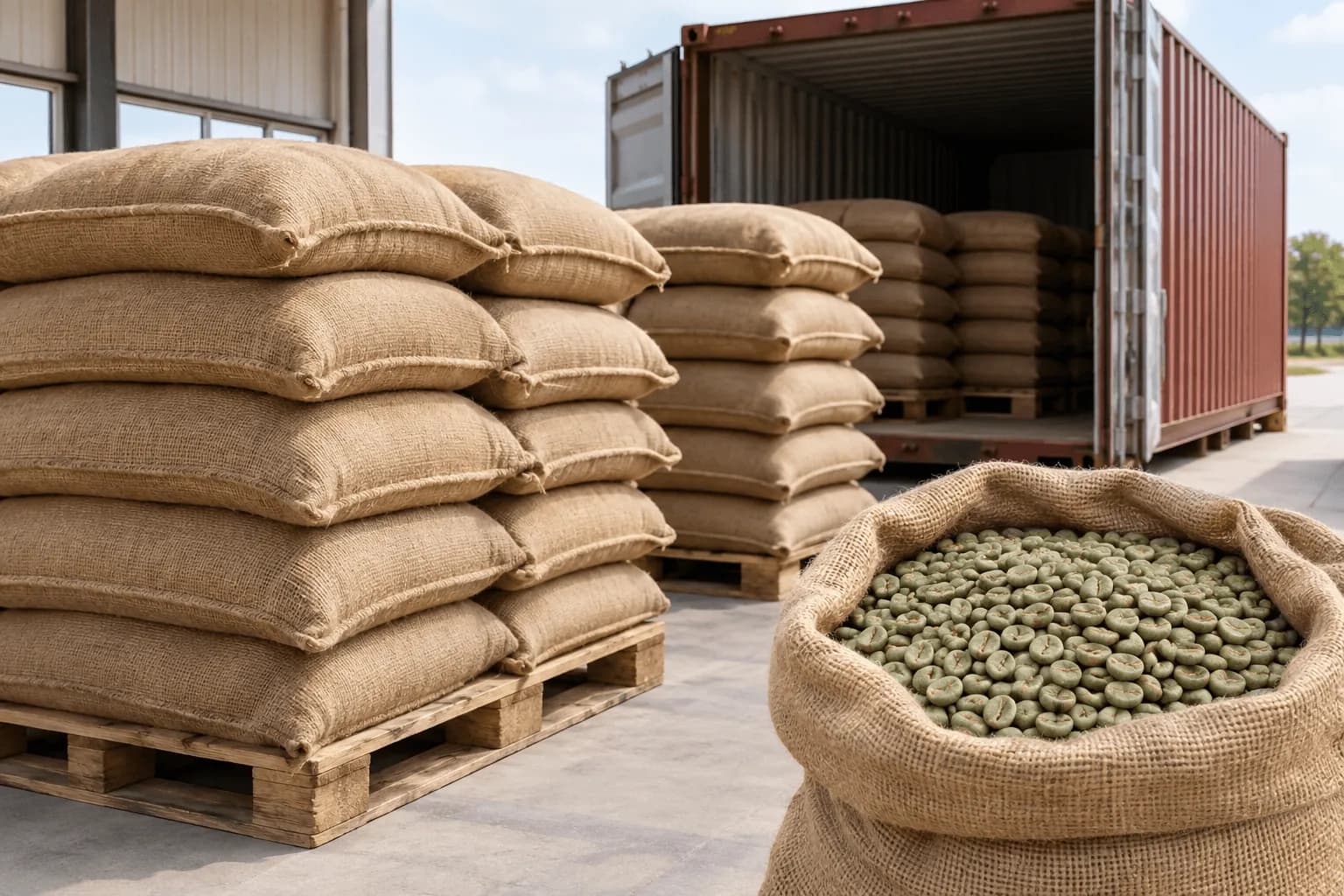
- Tanzanian coffee ships in 60 kg jute or sisal bags, about 300 to a 20-foot container.
- Moisture of about 10–12% at loading is the starting point for a safe voyage.
- Container rain, condensation dripping from the roof, is the main shipping risk.
- Hermetic liners protect high-value lots on long or humid routes.
- Store green coffee cool, dry, off the floor and away from odours.
Green coffee is a living product in slow decline. From the moment it is milled it begins to exchange moisture with the air around it and to lose the fresh character that roasters pay for. Good packing and shipping cannot improve a lot, but poor packing and shipping can ruin one. These are the precautions we take between the mill and the ship, and the ones worth taking at the other end.
Why does moisture at loading matter so much?
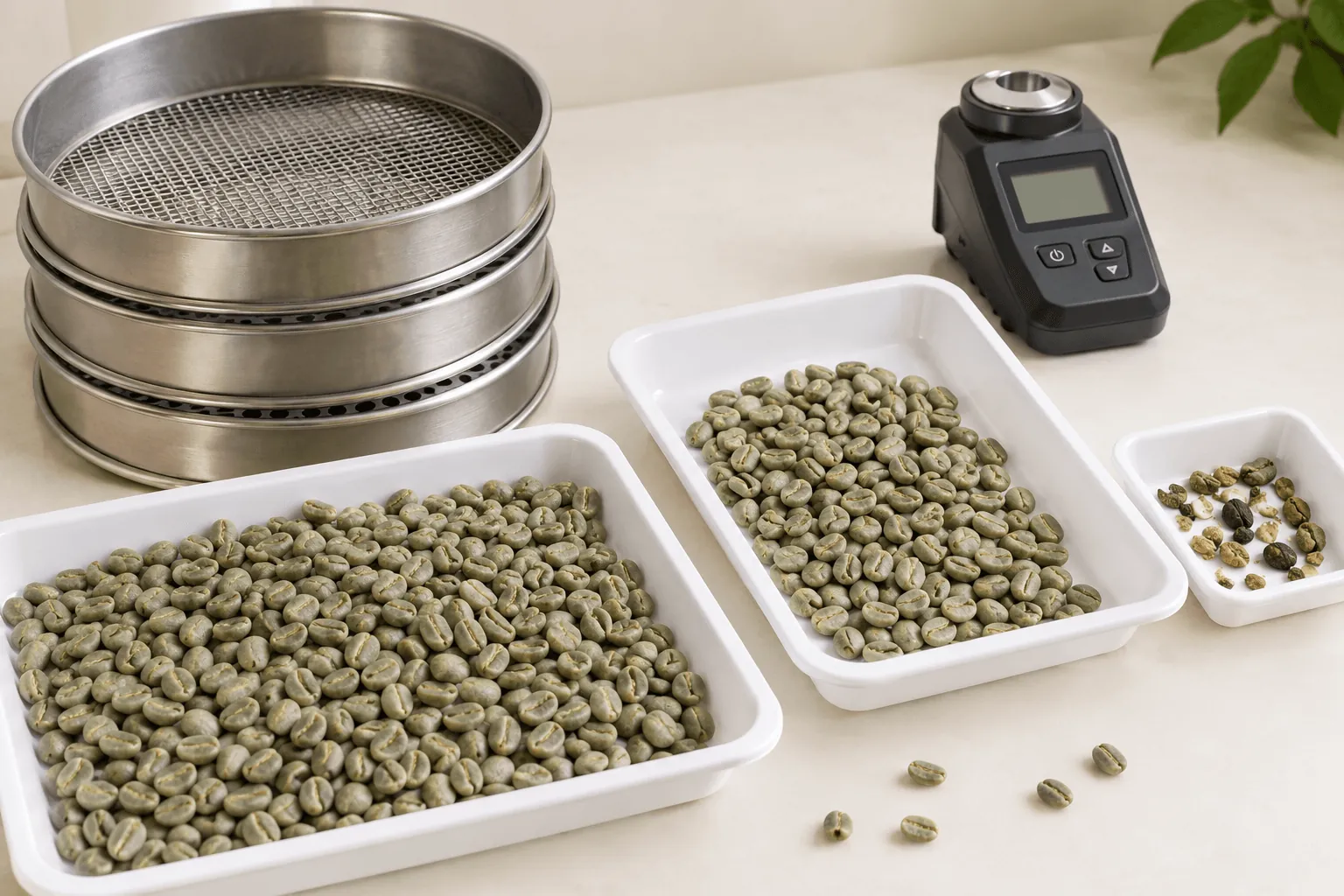
Coffee loaded too wet will release water into the closed container as it travels, and that water has to go somewhere. We check that each lot is at about 10 to 12% moisture before it is bagged. Coffee that is dry at loading, in a dry container, starts the voyage with a large margin of safety.
What is container rain, and how is it prevented?
A container crossing from the tropics to a temperate port goes through daily and seasonal temperature swings. Warm, moist air inside condenses on the cold steel roof and drips onto the top layer of bags: container rain. The defences are dry coffee, a clean and dry container, stuffing in dry conditions, and a protective layer such as kraft paper or a dry-bag lining under the roof and along the walls. Desiccants can help on long voyages. We inspect every container before stuffing and reject any that is damp, dented or smells of a previous cargo.
When are hermetic liners worth the cost?
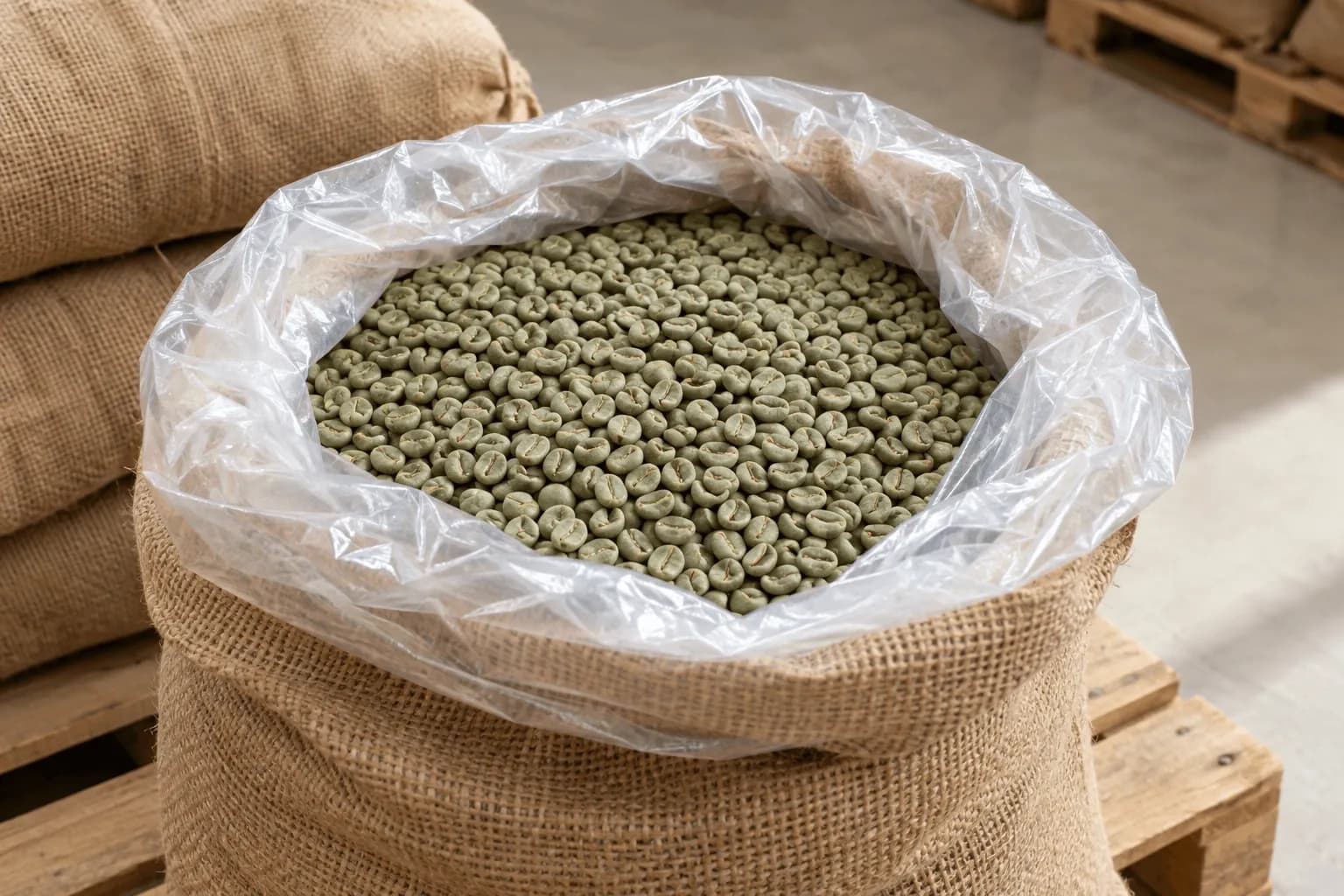
A hermetic liner is a multi-layer plastic bag inside the jute that slows the exchange of moisture and oxygen with the outside air. For specialty lots, where the buyer is paying for freshness and a particular cup, it is often worth the modest extra cost, particularly on long routes or when the coffee will sit in a warehouse before roasting. For commercial coffee on a shorter route, a sound jute bag in a well-prepared container is usually enough. We offer liners on request and price them separately so the choice is yours.
How should green coffee be stored after arrival?
Keep it cool, dry and dark, off the floor on pallets and a little away from walls, where condensation collects. Coffee readily picks up odours, so keep it well away from spices, chemicals and fuel. Rotate stock so older lots are roasted first, and record the arrival moisture so you can see if a lot is drifting. A lot that cupped well on arrival can still fade in a warm, humid warehouse over a few months.
Related reading
Leave a Comment
Your email address will not be published.