
A bright washed origin
Washed AA or A from the north or south, cupped for clarity and acidity.
Full container of about 300 bags
Wholesale green coffee, direct from Tanzania
Samples before contract · FOB quotes
Specialty roasters
Specialty buying is a cupping decision, so we start with a sample from the lot. We offer AA, peaberry and natural arabica with the region, producer group and processing method named, so the story on your bag is one you can stand behind.
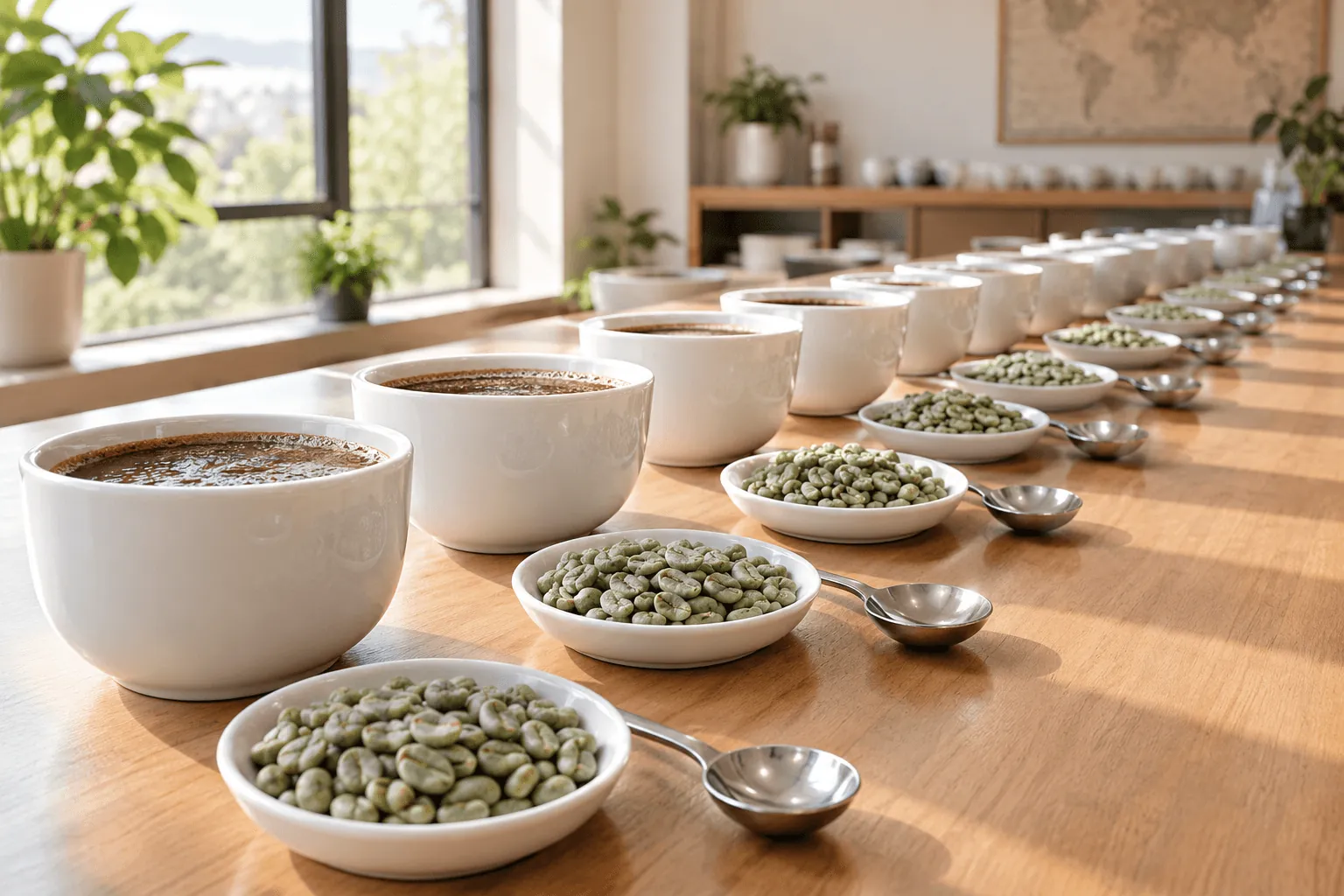
A specialty roaster buys a cup, not a screen size. The screen tells you the beans will roast evenly; only the cupping table tells you whether the coffee deserves its place on the menu. That is why every offer we make comes with a green sample drawn from the lot itself.
Tanzania gives specialty roasters a useful range. Washed AA from the northern slopes and the Southern Highlands, peaberry separated by shape, and natural arabica from the south where producers increasingly dry in the cherry. Each lot is named by region and producer group, which is what makes a single origin worth its label.
Decide what the coffee has to do on your menu, then cup against that.
Washed AA or A from the north or south, cupped for clarity and acidity.
Peaberry, which roasts evenly and sells well as a named Tanzanian coffee.
Natural arabica from the Southern Highlands, offered lot by lot as the season allows.
Region, producer group and processing method named on every lot we offer.
The more we know about your menu, the better the samples we send.
The same four checkpoints keep the sample, contract and commercial lot aligned.
Tell us the profile, grade and bag count you are after.
We send green samples from the lots that match, labelled by region and producer group.
The approved sample becomes the reference for the shipment.
The lot is bagged, lined if agreed, and shipped with its grading record.
We describe each lot and send a sample so your own cuppers can score it. Where a buyer wants an independent cupping, we can arrange it as a contracted test.
Our minimum is one 20-foot container, about 300 bags, but it can be split across several grades or lots when they are available together.
Often, yes. Direct-export contracts make repeat buying from one producer group easier; tell us early and we will plan around its harvest.
Send the product form, grade or end use, volume, destination port and required tests. Our export desk replies within one business day.