

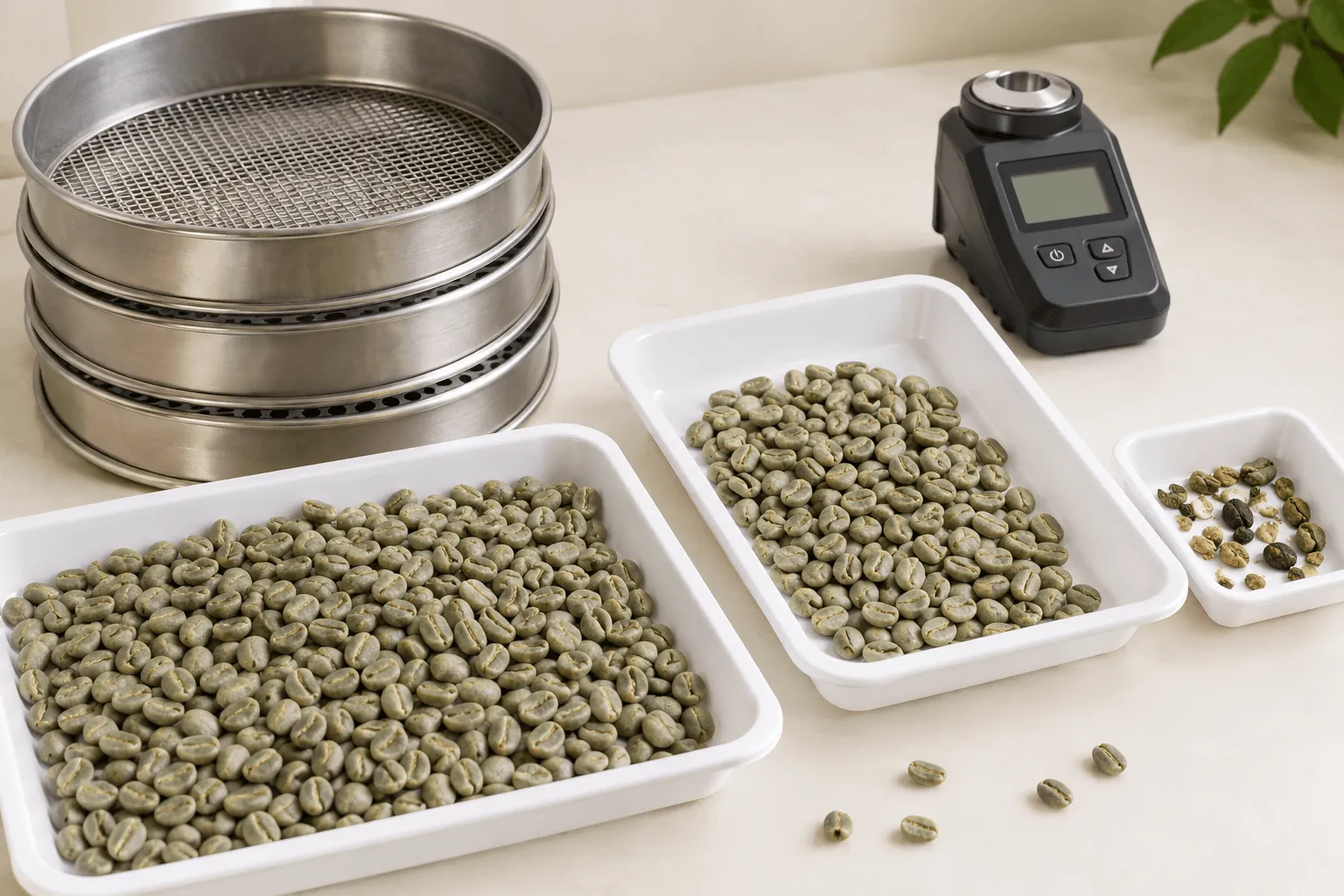
Compare offer, pre-shipment and arrival samples in one record. For each sample, identify the lot it represents, record how and when it was drawn, and keep the evaluation conditions beside the results. Then log what changed, what still needs explaining and who made the written decision.
Use the blank record below for your own procurement review. It contains no example results and does not describe an established Afri Exports approval procedure. Confirm the sampling and approval requirements with the parties before using it for a purchase.
Separate the sample stage from what it represents
Offer, pre-shipment and arrival describe points in the buying and shipping process. They do not, by themselves, tell you how the sample was drawn or which coffee it represents. Ask both questions separately.
- Offer sample: coffee presented for consideration. Confirm whether it represents an identified finished lot or is only indicative of the intended supply.
- Pre-shipment sample: coffee assessed before shipment. Confirm the final lot, which bags were sampled, and whether milling, blending or subdivision has changed the lot since the offer.
- Arrival sample: coffee assessed after arrival. Record the sampling location and date, the received lot or shipment marks, and the bags covered by the sample.
An indicative type sample can help you assess a proposed coffee style, but it cannot establish the condition of a finished lot that has not been identified. Leave representativeness unresolved until you have the sampling details. Terminology varies between suppliers: write out the meaning agreed for this purchase.
Blank comparison record: identify each sample
Copy these fields into your worksheet. Complete one entry for each stage, leaving unknown information blank until it is confirmed. Keep the original sample labels and supporting documents with the record.
- Shared record — buyer reference: ____; intended roast or use: ____; supplier contact: ____; purchase or contract reference and version: ____; record owner: ____.
- Offer — sample ID: ____; lot ID: ____; indicative or lot-representative, with basis: ____; person drawing sample: ____; bags or portion covered and sampling method: ____; draw date: ____; receipt date: ____; location: ____.
- Pre-shipment — sample ID: ____; final lot ID: ____; indicative or lot-representative, with basis: ____; person drawing sample: ____; bags or portion covered and sampling method: ____; draw date: ____; receipt date: ____; location: ____.
- Arrival — sample ID: ____; received lot and shipment marks: ____; indicative or lot-representative, with basis: ____; person drawing sample: ____; bags or portion covered and sampling method: ____; draw date: ____; receipt date: ____; location: ____.
- Identity check for each stage — stated origin: ____; crop: ____; processing: ____; grade: ____; document reference: ____; changes to lot identity since the previous sample: ____; explanation requested from: ____.
- Retained reference for each stage — sample ID: ____; quantity retained: ____; packaging or seal reference: ____; storage location and conditions: ____; custodian: ____; retention arrangement: ____.
Blank comparison record: keep results and conditions together
For each check, use the same row structure: requirement and its document reference | offer result and evidence | pre-shipment result and evidence | arrival result and evidence | observed change | unresolved question. Leave every result empty until it has been measured or documented.
- Physical checks — requirement/reference: ____; offer result: ____; pre-shipment result: ____; arrival result: ____; change: ____; question: ____. Record the unit, method, sample quantity, test date and equipment reference beside each result.
- Evaluation conditions — offer: ____; pre-shipment: ____; arrival: ____. Record evaluator, evaluation date, roast procedure and roast date, rest interval, preparation procedure, water and any departure from the chosen procedure.
- Cup observations — intended use/reference: ____; offer observations: ____; pre-shipment observations: ____; arrival observations: ____; change: ____; question: ____. Attach the evaluation sheets. If your procedure uses a score, record its scale and procedure with the actual result.
- Receiving evidence — shipment/lot reference: ____; bag condition and marks: ____; inspection date and location: ____; photographs or report reference: ____; question raised: ____.
Read the specification-sheet guide linked below for the meaning of physical measurements. This record tracks their basis and changes across samples; it does not set universal acceptance limits or a cupping protocol.
Blank change and clarification log
Add a separate entry for each difference that needs a response. Keep the observed difference separate from your proposed explanation.
- Comparison pair and sample IDs: ____; field that changed: ____; observed difference: ____; evidence reference/date: ____.
- Possible explanation to check: ____; variation already anticipated in the written requirements: ____; requirement still unresolved: ____.
- Question sent to supplier or evaluator: ____; sent by/date: ____; response owner: ____; agreed response date: ____; response and supporting evidence: ____.
- Follow-up check requested: ____; result/reference: ____; remaining uncertainty: ____; next action and owner: ____.
A change in tasting notes alone does not establish a defect. Check whether the samples represent the same lot and whether evaluation conditions differ before drawing a conclusion. Record suspected concerns and seek clarification rather than filling in a cause you cannot verify.
Record the decision separately from the observations
- Decision record — stage and sample ID: ____; decision: ____; decision-maker and role: ____; date: ____; written confirmation reference: ____.
- Scope of decision — lot and document version covered: ____; conditions or exclusions: ____; open questions: ____; next action and owner: ____; next review date: ____.
- Agreement references — evaluation procedure: ____; sample quantity required: ____; approval responsibility and deadline: ____; procedure for unresolved differences: ____; agreed terms document: ____.
Confirm the required sample quantity for the checks and retained reference. A pre-shipment approval records a decision at that stage; transport and receiving checks remain separate. This worksheet does not set contract rights, deadlines or remedies. Have the applicable wording reviewed by a qualified adviser.
Discuss the sample stage you need
For a Tanzanian green coffee enquiry, send the grade, lot reference if known, intended roast or use, volume, destination and sample stage required. Mark missing details as questions so the export desk can discuss them with you.
Sources on sample terminology and stages
- Ally Coffee: Green Coffee Sample Types and Terms- Stage, representativeness and sensory change; published June 26, 2018
- AGnimble: Understanding Green Coffee Sampling- Labels, handling and sample references; published June 29, 2022
- Sustainable Harvest: After pre-shipment approval- Logistics and receiving remain after approval; published May 28, 2026
Related reading
Leave a Comment
Your email address will not be published.