

Compare Tanzanian green coffee sources by checking who sells and exports the coffee, which lot the evidence covers, whether the order fits your volume and timing, and who handles each responsibility. Record missing information before requesting samples. Shortlist a source only when its offer is specific enough to assess against your requirements.
Use the blank source A/source B worksheet below to keep the two offers separate. This is a buyer planning tool, not a supplier ranking or an Afri Exports approval procedure. It ends with a source shortlist; tasting results, contract approval and import execution belong in later records.
Does the buying route fit your order?
Write down your intended use, quantity, destination and required arrival window first. Ask each source for its minimum order, where the coffee would be supplied from, and which dates remain subject to confirmation. An origin offer and coffee already held in a destination warehouse may involve different quantities, timing and responsibilities. If you need a smaller quantity or an earlier arrival, ask a warehouse-stock supplier whether it can meet that requirement before comparing it with a container offer.
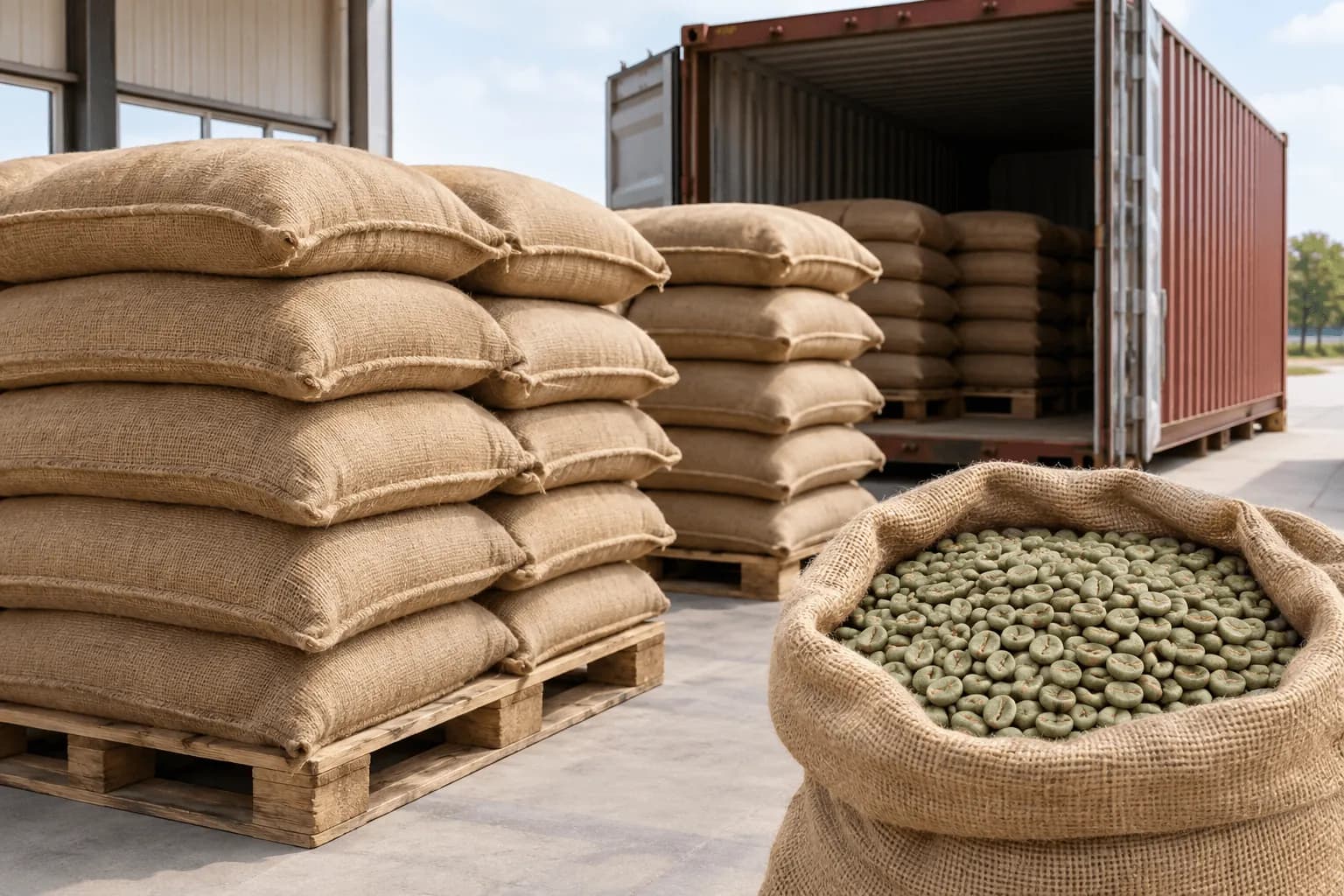
Afri Exports’ green coffee minimum is one 20-foot container: about 300 bags of 60 kg, or about 18 tonnes. Use that minimum as an early fit check. It is not a statement that a particular lot is available. Ask for current lot details and confirm the proposed shipment window separately from transit time.
Who is selling, and who will export?
Ask for the legal identity and role of the seller, the entity that would invoice you, and the exporter if different. Request current supporting documents and a way to verify their issuer, holder, scope and validity. Record any mismatch between names as a question for the source. A historical listing or a familiar trading name does not answer whether the documents supplied apply to this transaction.
Keep the buying channel separate from those identities. Ask who obtains the coffee, who makes it ready for export, and who answers if the offered lot changes. Do not infer these responsibilities from the words auction, direct export or direct trade.
If the source describes an auction or direct-export route, clarify the channel first.
Are the lot records comparable?
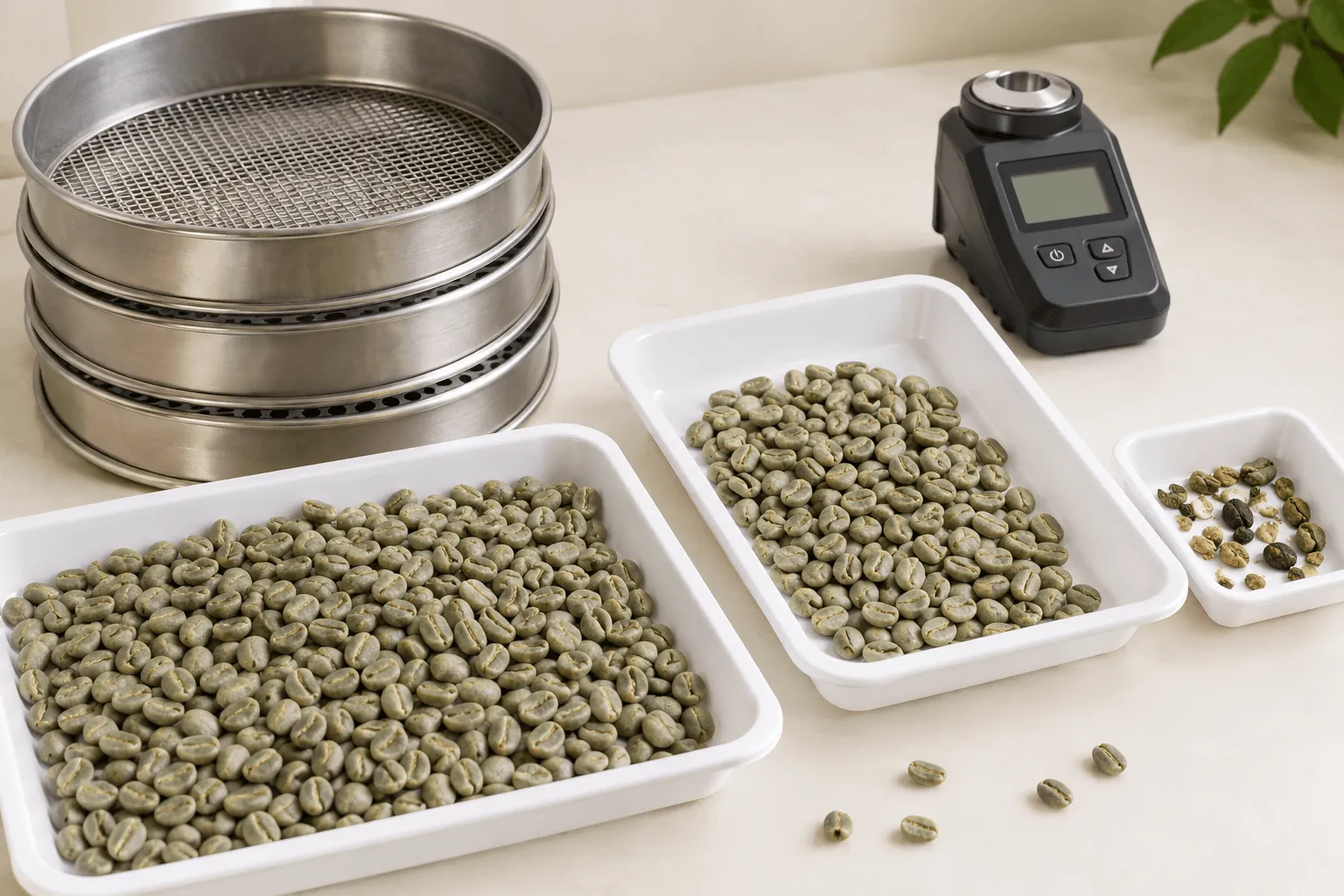
Ask each source to identify species, origin, processing, crop year and lot reference separately. Request the physical specification and the report or record supporting it, including the method and date where supplied. Keep the stated specification separate from a measured result. A regional name or grade alone cannot establish how the coffee will taste in your roast.
For Tanzanian arabica, a larger screen is not proof of a better cup. If your two offers differ in origin or processing, decide whether both belong on your shortlist before treating their grades as equivalent. Write the difference into the worksheet rather than filling the gap with an assumed flavour profile.
When choosing which arabica origins belong in your shortlist:
Before arranging a sample, ask whether it would represent the identified lot or be indicative of a proposed supply. Request the sample reference, its relationship to the lot, the quantity offered and any courier arrangements. If the relationship is unclear, request evidence first. This worksheet does not record tasting scores or compare offer, pre-shipment and arrival results.
Which responsibilities and terms still need an answer?
Record each offer’s quotation date and validity, currency and unit, named delivery basis, included and excluded costs, payment stages and proposed shipment window. Keep the actual quotation with the worksheet. If the bases differ, request clarification on the same basis before judging the offers against each other. Do not assume a delivery term resolves every document or quality responsibility.
Ask which bags and liners the source proposes, who confirms the packing specification, and which supporting record will identify it. List the documents your destination and purchase require, then ask who will provide each one and which requests remain unconfirmed. Have your importer or adviser verify destination requirements; this guide does not prescribe a legal document list.
For questions about bags, liners and moisture protection:
Blank source A/source B evidence worksheet
Copy the fields into your procurement file. For every field, complete both source columns and retain the evidence reference and date. Leave answers blank until received; mark missing evidence “not supplied” when reviewing. Do not treat an empty field as a pass. Add rows if one seller offers several lots.
- Buyer requirement — intended roast or use: ____; quantity: ____; destination: ____; required arrival window: ____; non-negotiable requirements: ____; record owner/date: ____.
- Row format — field: ____ | source A answer: ____; evidence reference/date: ____ | source B answer: ____; evidence reference/date: ____ | unresolved difference or question: ____.
- Seller legal identity, invoice entity and contact — source A: ____; evidence/date: ____ | source B: ____; evidence/date: ____ | question: ____.
- Exporter legal identity and relationship to seller — source A: ____; evidence/date: ____ | source B: ____; evidence/date: ____ | question: ____.
- Current identity/export documents: holder, scope, validity and verification result — source A: ____; evidence/date: ____ | source B: ____; evidence/date: ____ | question: ____.
- Species, stated origin, processing, crop year and lot reference — source A: ____; evidence/date: ____ | source B: ____; evidence/date: ____ | question: ____.
- Grade/physical specification and supporting record, method and date — source A: ____; evidence/date: ____ | source B: ____; evidence/date: ____ | question: ____.
- Proposed sample reference, indicative or identified-lot relationship, quantity and courier arrangements — source A: ____; evidence/date: ____ | source B: ____; evidence/date: ____ | question: ____.
- Minimum order, bag count, packing and liner responsibility — source A: ____; evidence/date: ____ | source B: ____; evidence/date: ____ | question: ____.
- Quotation reference/date/validity, currency/unit, named basis and excluded costs — source A: ____; evidence/date: ____ | source B: ____; evidence/date: ____ | question: ____.
- Payment stages and conditions requiring confirmation — source A: ____; evidence/date: ____ | source B: ____; evidence/date: ____ | question: ____.
- Proposed shipment window, transit assumption and timing still unconfirmed — source A: ____; evidence/date: ____ | source B: ____; evidence/date: ____ | question: ____.
- Required destination documents, provider for each and unresolved requests — source A: ____; evidence/date: ____ | source B: ____; evidence/date: ____ | question: ____.
- Missing evidence, question sent, response owner and response date — source A: ____; evidence/date: ____ | source B: ____; evidence/date: ____ | question: ____.
Should you request evidence, request samples or exclude?
- Request evidence: use this when a potentially suitable source has an unresolved identity, lot, minimum, timing or responsibility question. State exactly what is missing and who will obtain the answer. Keep the sample request on hold where that answer determines whether the source fits.
- Request samples: use this when the documented order fits your requirements and you understand what the proposed sample would represent. Record any remaining conditions. A sample request is permission to evaluate coffee, not approval of a supplier or purchase.
- Exclude from this shortlist: use this for a stated mismatch you cannot accept, such as an unsuitable minimum or timing, or evidence that remains inadequate for your requirements after clarification. Record the specific reason and evidence. This is a decision about your purchase requirements, not a public judgment about the seller.
- Source A decision — request evidence / request samples / exclude: ____; requirement and evidence supporting decision: ____; remaining conditions: ____; next action/owner/date: ____.
- Source B decision — request evidence / request samples / exclude: ____; requirement and evidence supporting decision: ____; remaining conditions: ____; next action/owner/date: ____.
- Shortlist review — reviewer/date: ____; sources retained: ____; reasons: ____; unresolved items before proceeding: ____.
What should you send with a shortlisted-source enquiry?
Send the intended use, species or grade sought, quantity, destination, timing requirement and evidence still needed. Refer to the source’s lot reference where one has been supplied. Ask for missing answers explicitly instead of describing an unverified offer as approved.
Once your source shortlist is settled:
What if a source has not supplied enough lot evidence?
Mark the evidence not supplied and request the specific missing record. Keep the source decision conditional; do not infer lot identity, sample representativeness or order fit.
Does requesting samples approve a coffee supplier?
No. It records a decision to evaluate the proposed coffee. Supplier approval, purchase terms and subsequent sample results require separate review.
Related reading
Leave a Comment
Your email address will not be published.