
At a glance
- Screen size is a sieve measurement in 64ths of an inch, not a quality score.
- Moisture of about 10–12% is the working range for stable green coffee.
- Water activity complements moisture; many specialty buyers want it below about 0.6.
- Defect counts only mean something when the sample size and method are stated.
- Crop year matters: coffee fades as it ages, whatever its grade.
- The cup is the final test; nothing on the sheet replaces roasting a sample.
A green coffee offer compresses a lot of information into a few lines, and each line answers a different question. Some describe the physical bean, some describe its condition, and some describe where it came from. None of them, on its own, tells you how the coffee will taste. Here is how we read an offer, line by line.
What does the screen size tell you?
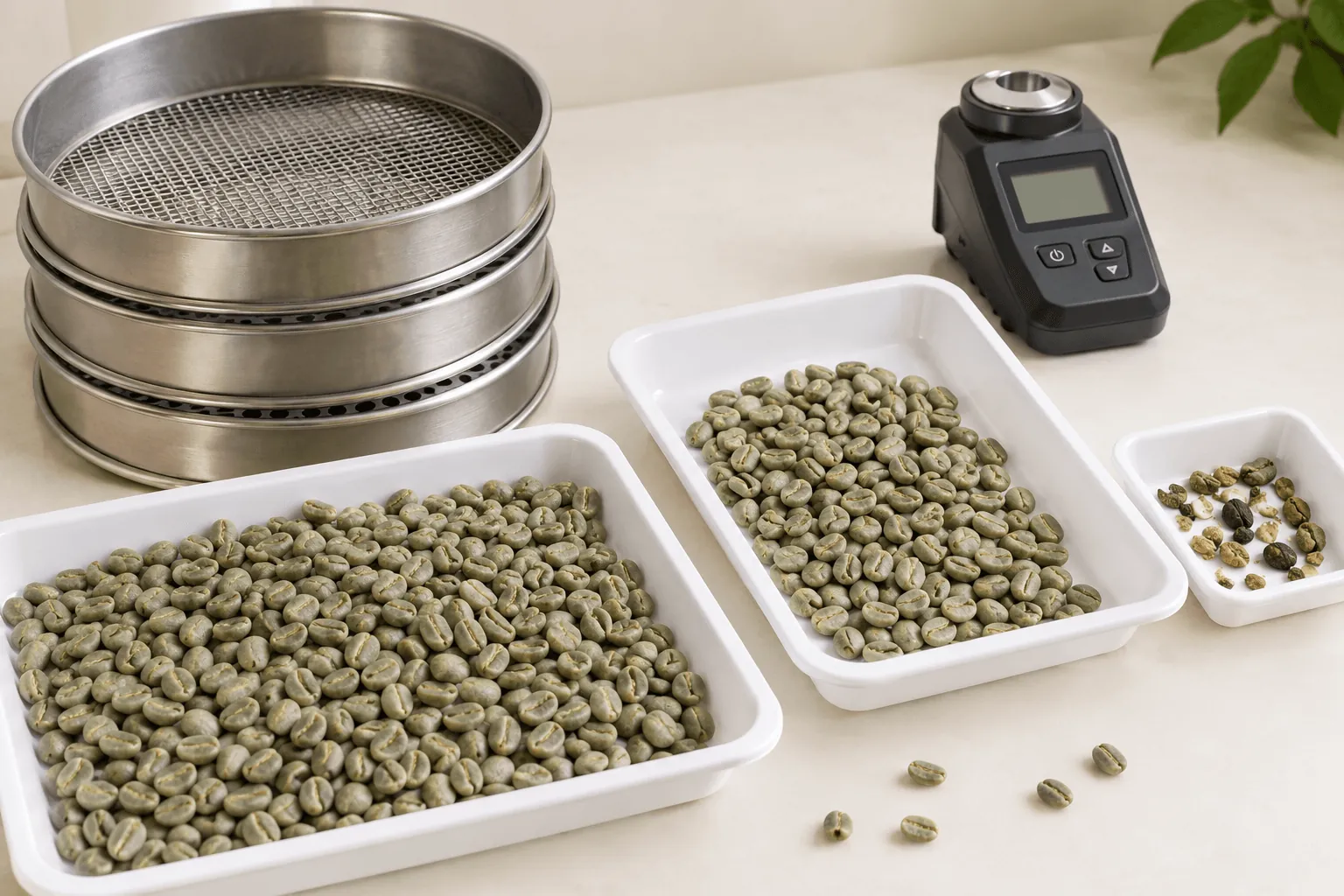
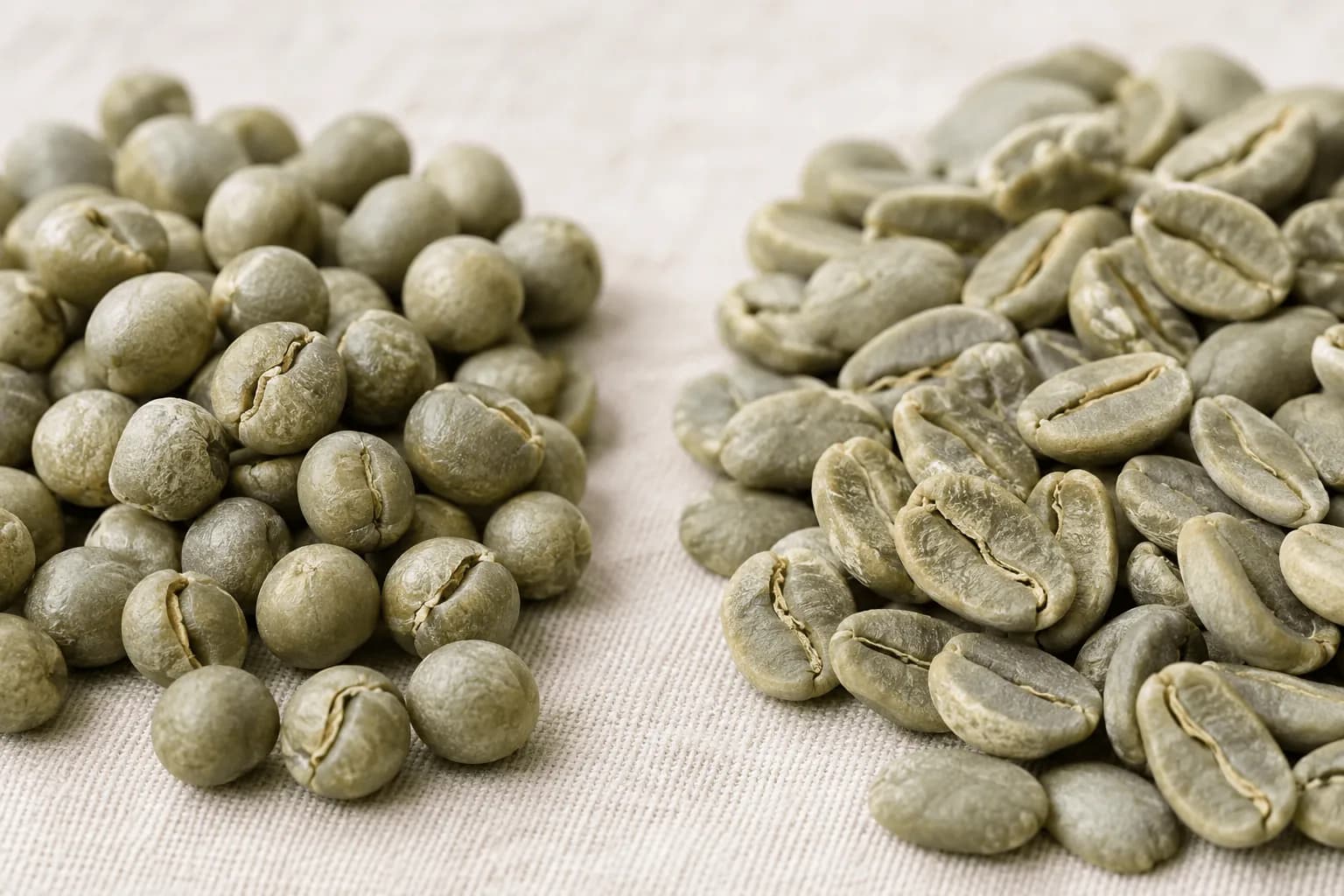
Screen size is the diameter of the round holes in the sieve that holds the bean back, measured in 64ths of an inch. Tanzania's arabica grades are built on it: AA is retained on screen 18 (about 7.14 mm), A on screen 17 (about 6.75 mm) and B on screen 16 (about 6.35 mm). Peaberry is the exception, separated by shape rather than size. A narrow, even screen band matters because beans of the same size take heat at the same rate, which gives an even roast. It says nothing reliable about flavour.
Why do moisture and water activity both matter?
Moisture is the share of the bean's weight that is water, normally measured by oven drying under ISO 6673 or with a calibrated meter. Around 10 to 12% is the working range: wetter coffee invites mould and loses quality quickly, and over-dried coffee turns papery and roasts unevenly. Water activity measures something related but different, how much of that water is free to take part in microbial growth and chemical change. Two lots at the same moisture can differ in water activity, and the one with higher activity will usually age faster. Many specialty buyers look for readings below about 0.6.
How should defects be read?
A defect count is only meaningful alongside its method. The Specialty Coffee Association inspects a 350 g sample and separates primary defects, such as full black or sour beans, fungus damage and foreign matter, from secondary ones such as partial blacks, broken or insect-damaged beans. Other buyers use their own sample size or a national standard. When you compare two offers, check that the defect counts were made the same way; otherwise the lower number may simply come from a smaller sample.
What do crop year, processing and density add?
Crop year tells you how old the coffee is. Green coffee does not keep indefinitely, and last season's lot will usually cup flatter than the current crop, whatever its grade. Processing method, washed or natural, shapes the cup more than screen size does: washed Tanzanian arabica tends toward clarity and acidity, naturals toward body and fruit. Density, where it is measured, is a useful signal of altitude and slow maturation, and Tanzanian grading has long considered it alongside size.
What the sheet cannot tell you
Every number above describes the bean's physical condition. None of them describes its flavour. That is why every offer we make comes with a green sample from the lot, and why the approved sample, not the sheet, should be the quality reference in your contract. Read the sheet to decide which samples are worth roasting; read the cup to decide what to buy.
Related reading
Leave a Comment
Your email address will not be published.