
At a glance
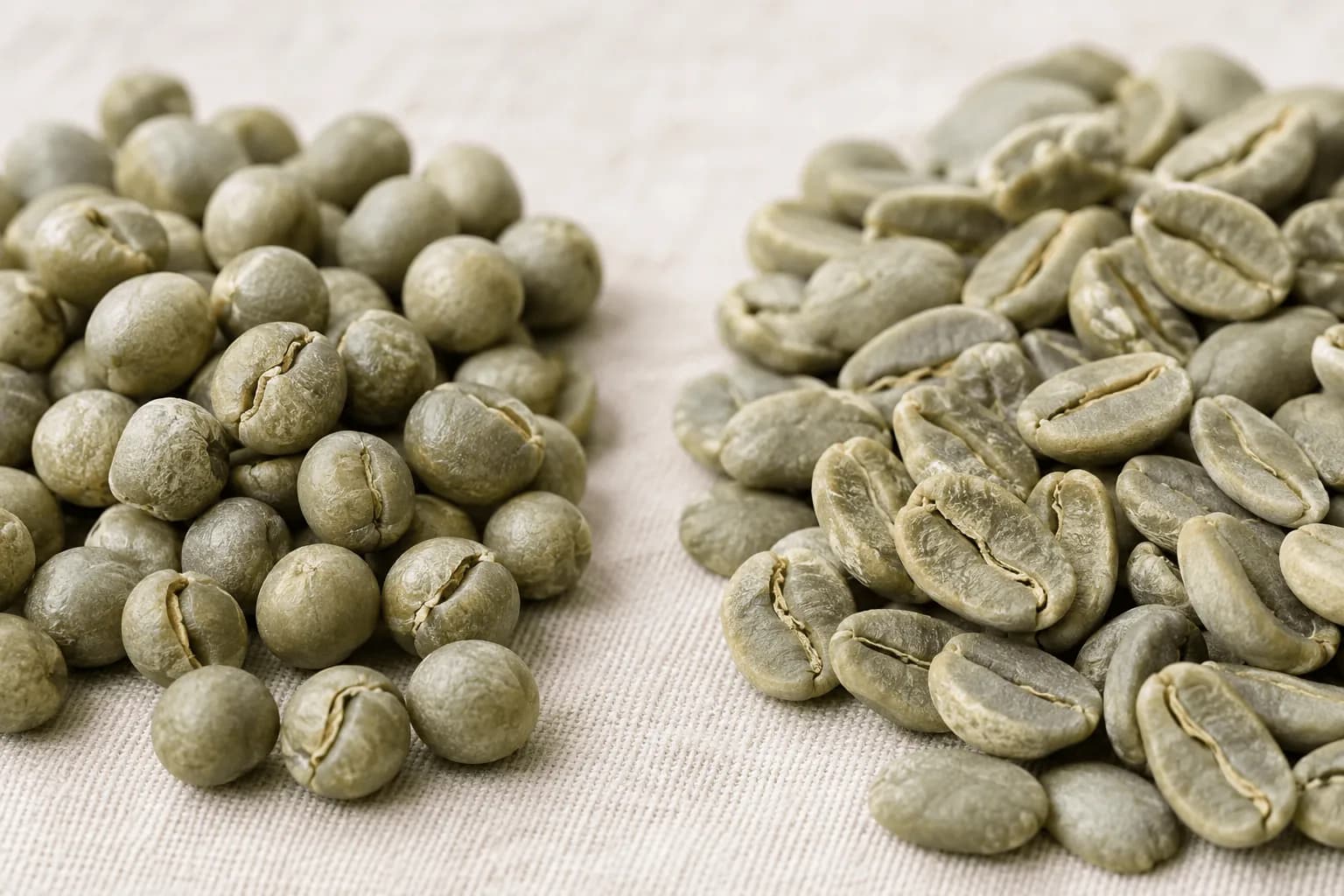
- A peaberry is a cherry that grew one round seed instead of two flat-faced ones.
- It occurs in a small share of cherries, often put at around one in twenty.
- Tanzania separates peaberry by shape and sells it as its own grade, PB.
- Round beans roll in the roaster drum, which helps an even roast.
- Flavour claims vary lot to lot; cup the sample before paying for the label.
Most coffee cherries hold two seeds, pressed together so that each grows a flat face. Occasionally only one seed develops, and without a partner to press against it grows round. That single rounded seed is a peaberry. It is a natural variation found in every coffee origin, but Tanzania is the origin that has made it a recognised grade and, for many buyers, a reason to buy Tanzanian coffee at all.
Why does Tanzania sort peaberry separately?
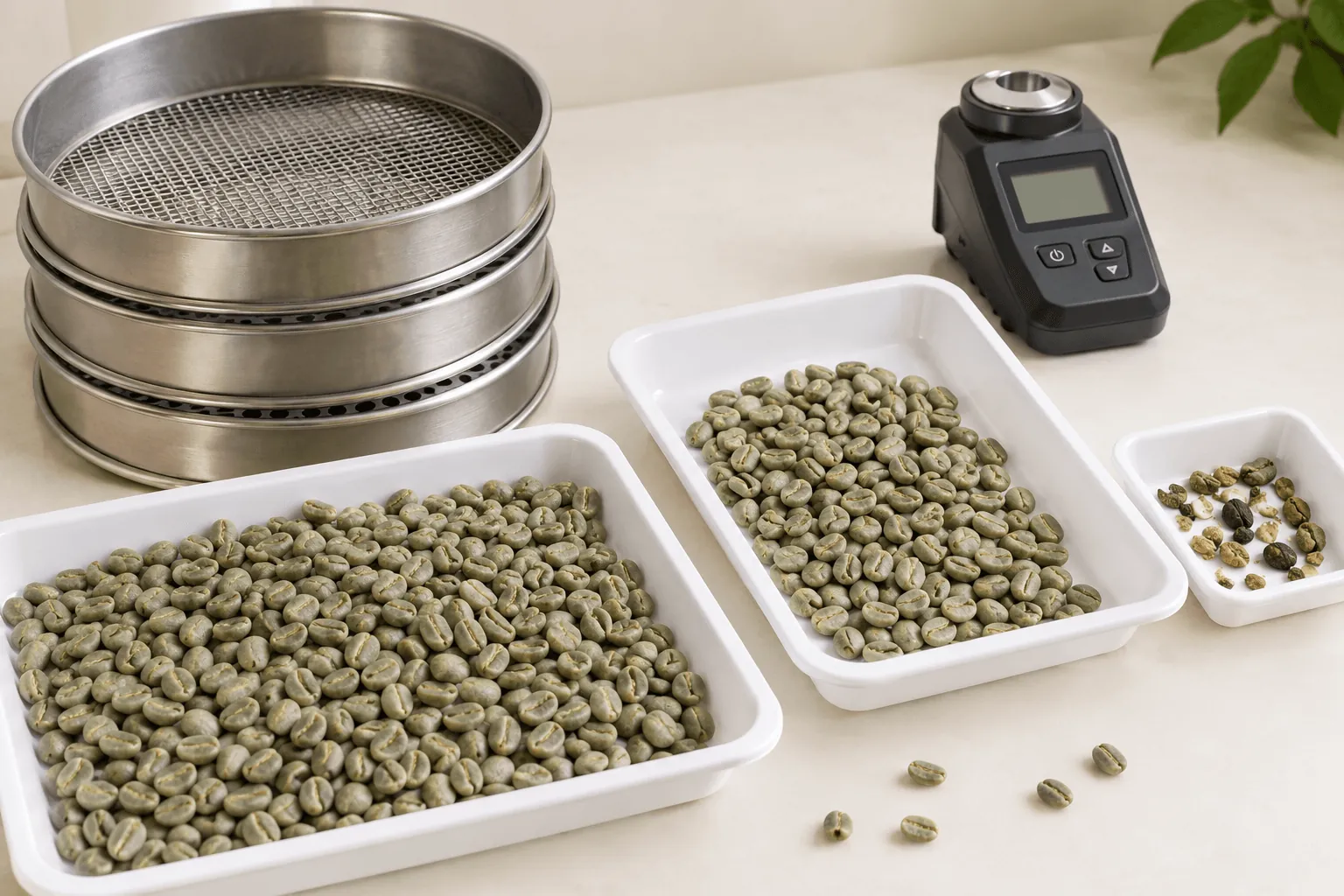
Because mixing round and flat beans works against an even roast. A peaberry is denser in shape and heats differently from a flat bean of similar size, so a lot that mixes the two roasts less evenly than either would alone. Tanzanian mills separate peaberry by shape, using screens that round beans pass through differently from flat ones, and sell it as PB alongside the size grades AA, A and B. The result is two better lots instead of one uneven one.
How does peaberry behave in the roaster?
Its round shape lets it roll through the drum rather than lying on a flat face, which tends to give an even colour through the batch. Roasters often find peaberry takes heat a little differently from flat beans of the same origin, so a first roast should be treated as a test rather than a copy of an existing AA profile. Log the batch and cup it before settling a production profile.
Is peaberry worth the premium?
It depends what you are paying for. If you want a named Tanzanian single origin that roasts evenly and sells well on the shelf, peaberry is a proven product. If you are paying on the belief that peaberry always tastes sweeter or more intense, be careful: that claim is widely repeated but does not hold for every lot. The honest position is the same as for any grade. The letters describe the bean; the cup describes the coffee. Ask for a sample, roast it, and decide on what you taste.
How much peaberry is available?
Less than the size grades, because it is a small share of every harvest, and good peaberry lots from a strong washing station are committed early in the season. Buyers who want PB every year do best to say so early and to be flexible on region, since both the northern and southern growing zones produce it.
Related reading
Leave a Comment
Your email address will not be published.